Computational infrastructure for autonomous platforms and mission systems.
The solver that doesn’t crash when sensor data turns adversarial. Digital twins that actually match the platform. Embedded math that runs the same on the workstation, the HIL rig, and the airframe — and an evidence base built to survive a program-office audit.
Standard scipy survival at matched noise (validated arms)
11.78T+
Datapoints analyzed
Air‑gapped
Compile-time license · no phone-home
Proofs of concept
19 audit-ready POCs. Every claim is a captured number.
Mission-stack POCs (Assured Sensing, SolvFilter tracking, coalition replay) plus SolvNum substrate proofs. Each ends with a captured metric and a hash you can re-derive. Stack-level product proofs (16–19) wire Assured Sensing, SolvFilter, and MoridainDefense to the same evidence model as the substrate POCs.
One computational engine. Eight mission domains it changes.
The same noise-stable solver, embedded-first design, and audit-grade evidence base show up across air, sea, space, sensors, sustainment, and program acceptance.
Air & Autonomy
GN&C math that survives the contested edge
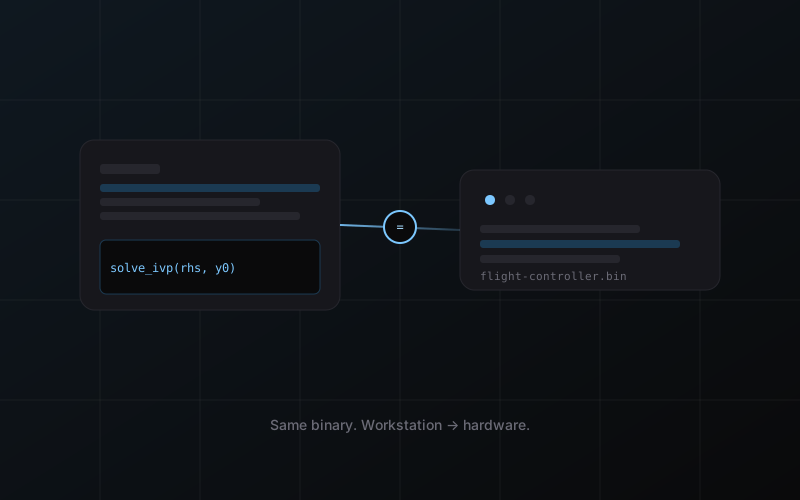
Flight controllers, autopilots, and autonomy stacks are only as good as the math inside them. Our solver runs the same compiled binary in MATLAB, on a HIL rig, and on the airframe - and survives the kind of noisy, impulsive, non-stationary sensor data that breaks every other integrator at exactly the moment it matters.
SolvSRKSolvSRK-UQSolvNum
Sustainment & Readiness
Platform digital twins that actually match the platform
Predictive maintenance and fleet-readiness twins fail because the on-board model and the cloud model are different software. We collapse them into a single binary, so a divergence between the platform and its twin means a real fault, not a software artifact. Less alert fatigue. Fewer false-positive inspections. Higher mission-capable rate.
SolvSRKSolvNum
Sensors & Fusion
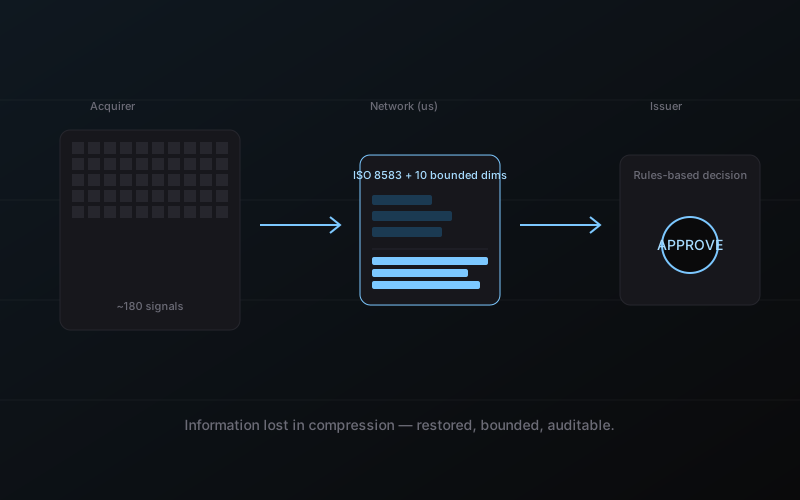
Recover the intelligence the link compression throws away
Tactical data links and sensor-fusion buses compress a rich upstream picture into a small standardized message. MoridainDefense recovers bounded intelligence inside the existing envelope — operator-triage POC harness on synthetic fusion streams; card-rail IFX benchmarks live under the Moridain platform SKU.
MoridainDefenseAssured SignalSolvFilter
Targeting & Decision Support
Calibrated confidence on the operator's display
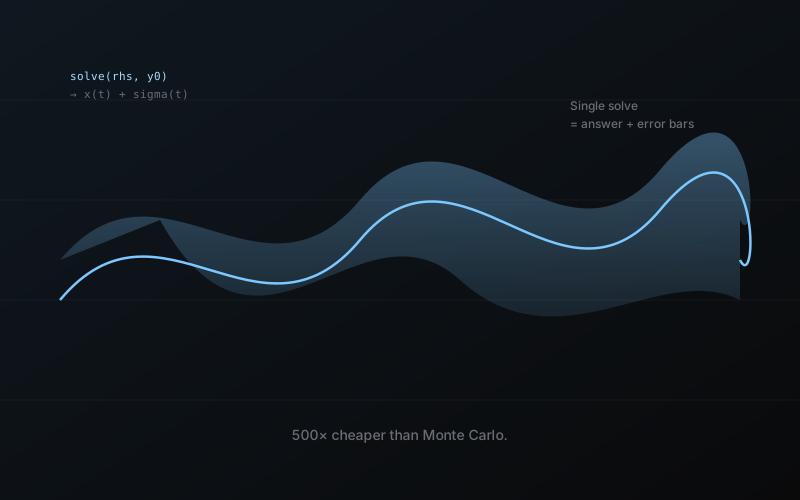
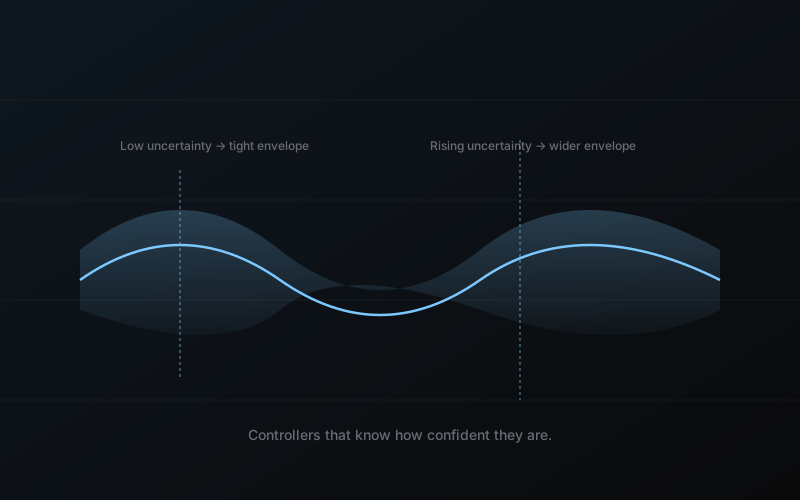
Targeting, mission planning, and clearance decisions all need to know how confident the math actually is. SolvSRK-UQ delivers calibrated uncertainty envelopes from a single solve - fast enough to sit inside an autopilot, an operator console, or an airworthiness certification harness instead of a Monte Carlo data-center campaign.
SolvSRK-UQ
Space & Long-Duration
Long-horizon stability for orbital and on-station math
Orbit propagation, attitude control, and long-duration thermal models accumulate drift in standard solvers. SolvSRK is validated for 100,000 integration steps with no drift - across stiffness regimes from gentle dynamics to eigenvalue ratios of 10⁶ - without per-system tuning.
SolvSRK
Naval & Subsurface
Navigation math that doesn't crash when the data gets messy
Subsurface navigation, current compensation, and drift correction live or die on solver behavior under sensor noise. Our solver was discovered through validation against exactly that regime - built embedded-first, in C, with airgapped license enforcement suitable for classified firmware.
SolvSRKSolvSRK-UQ
Determinism & Replay
Plan, flight, and replay agree to the bit
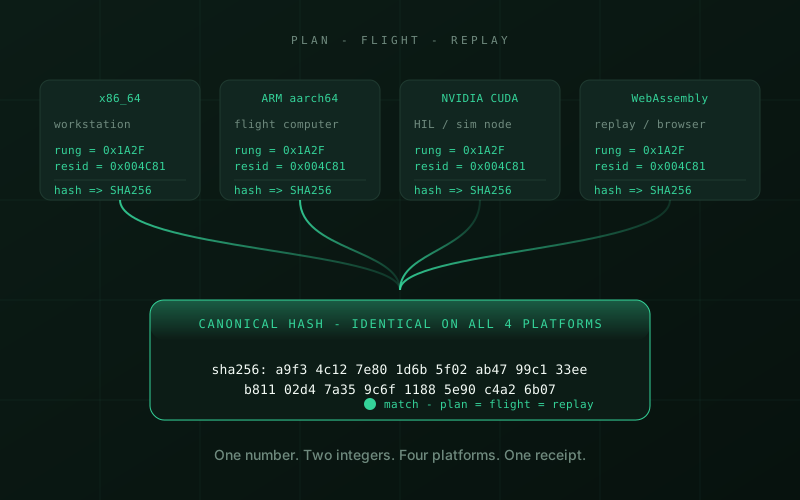
Mission orders are approved on one machine, executed on another, and replayed on a third — and the numbers have to be the same. SolvNum is a deterministic real-number primitive that produces bit-identical arithmetic across x86, ARM, NVIDIA GPU, and WebAssembly. One SHA-256 receipt proves plan = flight = replay. A cross-target equivalence argument that fits on one line of a DO-178C / ISO 26262 certification package.
SolvNum
Program Audit & Acceptance
Solver decisions that survive a program-office review
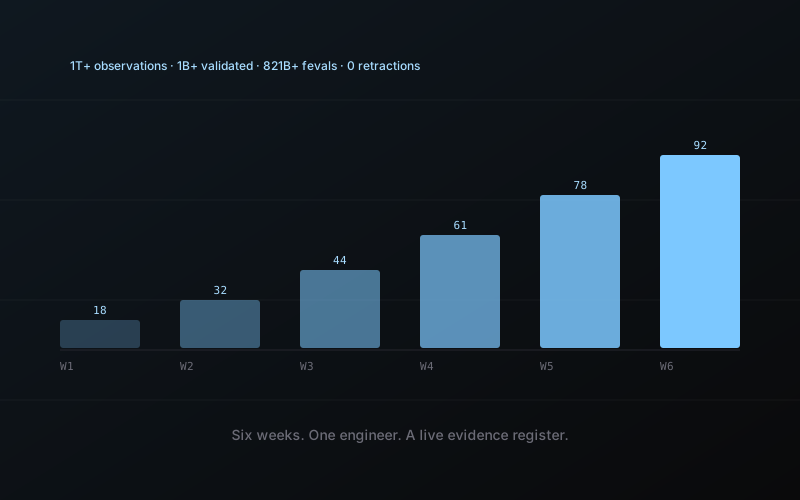
Every numerical claim on this site traces back to a test, a seed, and a verdict in our internal evidence register. The same standard travels with the products you buy: SolvScout fingerprints your system and ranks every candidate solver with dead zones called out, and SolvJump plus SolvSRK proof runs archive the decision in replayable release bundles — so “why this solver?” has a defensible answer at TRR, milestone audit, and Section 818 review.
SolvScoutSolvJumpSolvNum
Have a specific program in mind?
We engage under appropriate agreements (NDA, ITAR-aware, and Canadian Controlled Goods where applicable). Briefs are short, technical, and respectful of your time.
The defense product line on top of one computational engine.
Same catalogue and benefit-led copy as /products. Defense validation for libraries and stacks is under defense POCs.
Solvers
Noise-robust integration and uncertainty — same binary from bench through HIL to flight.
Solver
SolvSRK
Keep simulating when sensor noise kills every other integrator.
Your model is stiff and your data is messy — the combination that sends BDF and RK pipelines into blow-ups, silent early stops, or runtimes that miss the HIL window. SolvSRK is built so GN&C, propulsion, and process teams finish trajectories they can trust, then ship the same binary from bench to embedded target.
Fewer failed integration runs and less time lost re-tuning after every noise scenario.
One C-native integrator from workstation through HIL to flight — no second engine on the vehicle.
Survives drift, vibration, and impulsive disturbances that break stock scipy/CVODE arms in validation.
Certification, risk, and autonomy teams need error envelopes — but thousand-run Monte Carlo grids miss program milestones. SolvSRK-UQ delivers calibrated uncertainty alongside the trajectory in one pass, fast enough for control loops, overnight risk batches, and evidence packages that auditors can reproduce.
Collapse weeks of ensemble runs into a single integration when the envelope is the deliverable.
Give controllers and operators a live confidence signal instead of a fixed worst-case margin everywhere.
Support regulatory and model-risk narratives with UQ tied to the same solver that flies.
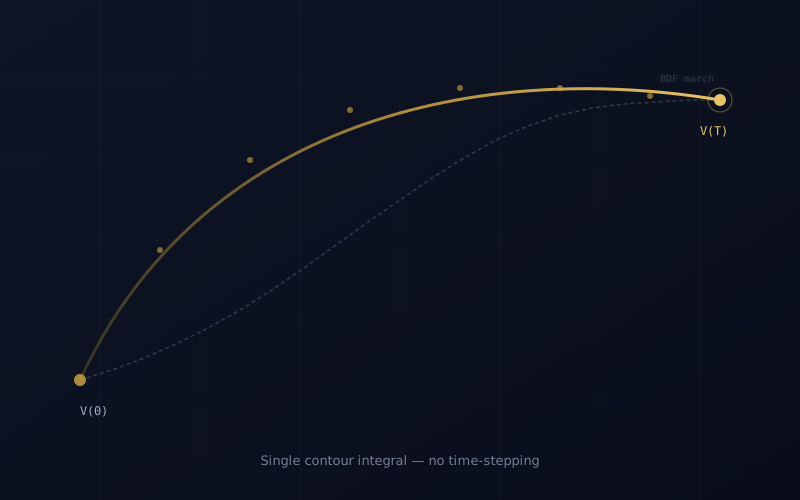
Answer at time T without paying for every micro-step in between.
Long horizons and stiff linear structure punish time-marching solvers — you pay in steps, in stiffness, and in repeated factorizations across scenarios. SolvLRDE targets the linear response directly so scenario grids, strike ladders, and EMTP-style studies scale with factorization reuse, not with horizon length.
Scenario and parameter sweeps that used to be overnight can fit in interactive design loops.
Stable cost story when stiffness would force microscopic steps in explicit integrators.
One factorization backbone reused across strikes, faults, and grid contingencies.
Tracking, deterministic arithmetic, bounded-signal enrichment, and channel conditioning inside live mission software.
Library
SolvFilter
Hold the track picture when UKF stops scaling.
At fleet-scale state dimension, UKF prediction becomes the bottleneck — or it simply does not finish. SolvFilter keeps multi-target EKF prediction inside embedded budgets so counter-UAS and fusion programs keep a consistent track state instead of dropping contacts when the covariance step blows the frame budget.
Complete high-dimension predict steps where UKF times out or dominates wall-clock.
Validated deploy-survival narrative for radar tracking stacks — not a lab-only prototype.
Honest positioning: UKF alternative at scale; scipy EKF parity in calm noise, not a universal drop-in.
When three teams run the same mission math on three platforms and get three different answers, the argument is never about physics — it is about arithmetic. SolvNum gives you bit-identical reals across CPU, GPU, and WASM with a cryptographic receipt, so V&V, coalition replay, and capital models stop fighting floating-point drift.
End the “works on my machine” deadlock in mission replay and digital-thread workflows.
One hash proves agreement between lab, field, and regulator replay environments.
Shrink re-validation cycles when hardware or cloud target changes.
Rank the operator queue without a fusion model on the device.
Tactical links and fusion buses compress a rich picture into a thin message. MoridainDefense restores bounded intelligence inside that envelope — so strike, ship, SOF, and vehicle endpoints see role-tailored queues with severe-band threats surfaced by construction, not policy tuning.
Recall@10 ~0.83 vs ~0.04 legacy rule stack on synthetic fusion streams (POC 16 harness).
17-byte bounded alert packets (19 B with optional AO tag) — fits tactical link budgets.
Per-role / per-AO projection with 32-byte static profiles; no on-device ML weights.
See the dynamics in the channel again — without a tuning lab.
Contested sensing hides low-dimensional structure under noise; fixed denoisers either smear real signal or fail in the field. Assured Signal cleans scalar radar, sonar, EW, and telemetry traces automatically so detectors and trackers work on geometry, not garbage — with a design goal that reconstruction never makes the input worse.
Recover usable features upstream of ATR, fusion, and classification when LP-class methods collapse.
Zero knob-turning on the hot path — operators are not maintaining embedding charts per theater.
Drop-in stage: denoise, then run your existing chain unchanged.
Evidence-first solver selection and ground-side tuning — exploration stays on the bench.
Developer tool
SolvScout
Stop guessing which solver your model actually needs.
The wrong integrator costs months of false confidence before a stiff cell or noise case fails in review. SolvScout fingerprints your system, benchmarks every serious candidate on your problem, and shows a ranked table — including when a competitor wins — so model validation starts from evidence, not habit.
Minutes to a defensible solver recommendation instead of weeks of ad hoc comparisons.
Dead zones called out honestly — no marketing table that hides where you will fail.
Free lifetime seat after registration — remove friction from every new program onboarding.
Shortlist integration candidates in minutes; confirm in hours—not weeks of sweeps.
Integration programs bleed calendar on hand-rolled parameter marathons and configs that only survive until the next variant. SolvJump ranks plausible integrator settings in minutes on the bench, then drives SolvSRK proof runs on finalists so you sign off in hours—not days or weeks babysitting sweeps.
Surface integration candidates in minutes instead of queuing another multi-day sweep.
Confirm finalists with governed SolvSRK proof runs in hours, with evidence reviewers can replay.
Cut gate-review risk — fewer milestones blocked on “we are still tuning tolerances.”
Assured Sensing stack demos (BSE → detection → MoridainDefense) live in the proofs of concept above — same evidence model as the product briefs.
Engagement model
Built for programs that have to survive audit.
ITAR-aware. Airgapped delivery available for classified work. Compile-time license — no phone-home, no telemetry, no surprise dependencies. Every numerical claim traces back to a test ID, a seed, and a verdict in a live evidence register.